As live streaming e-commerce, remote conferencing, and online education continue to expand, USB external cameras have long transformed from supplementary peripherals to essential devices. GreenLink has recently launched two differentiated high-definition cameras, the CM973 and CM929. Both products are developed based on Ingenic T-series vision processors. Leveraging the mature image, encoding, and AI audio algorithm systems, they cover the professional 4K live streaming and professional 2K AI live streaming tracks respectively, balancing image quality, audio capture, and multi-system adaptability to deliver a practical desktop video capture solution.
1. Differentiated Positioning of the Two Products, Covering Full-Scenario Video Requirements
1.1 CM973 4K Professional Live Streaming Camera (8 Megapixels)
The GreenLink CM973 4K Professional Live Streaming Camera is built for high-quality scenarios such as live streaming sales, professional online courses, and large-scale online conferences. Equipped with a 1/2.55-inch Sony CMOS sensor, it supports native 4K@30FPS video output with 8-megapixel high-definition resolution, which can clearly present product textures, facial features, teaching content, and conference screen details, making every appearance more professional and authentic.
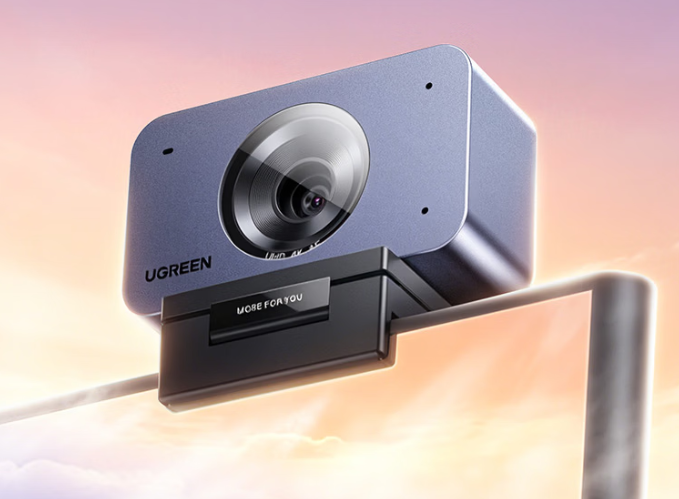
In terms of image performance, the CM973 is equipped with a VCM autofocus motor, which can quickly complete focus tracking according to the movement of people or the change of object distance, effectively reducing the out-of-focus and blurring issues common to traditional fixed-focus cameras. Whether the anchor shows the product at close range, the teacher switches to explain content, or the conference speaker moves while speaking, the main subject can remain clear to enhance the viewing experience.
For audio performance, the product has a built-in AI dual noise-canceling microphone, combined with AGC automatic gain and ENC environmental noise reduction technology. It can automatically suppress background noise in noisy environments and stabilize the human voice volume, making live streaming explanations, online teaching, and remote conference communication clearer and more natural.
In terms of functional experience, the CM973 supports one-touch switching between portrait and landscape modes. Landscape mode is suitable for traditional scenarios such as conferences, education, and computer live streaming, while portrait mode is more adapted to short video live streaming and mobile content platforms. The built-in intelligent FaceAE algorithm can automatically optimize facial brightness and skin tone performance in complex light environments such as strong light and weak light, making the on-camera state more natural and textured.
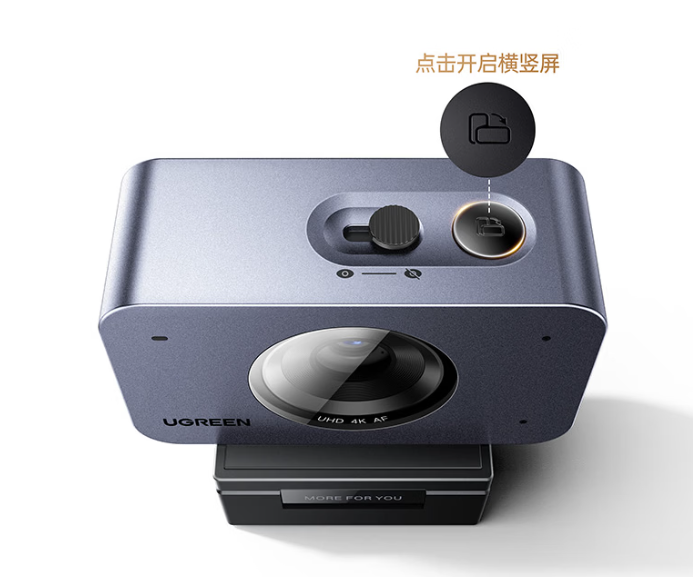
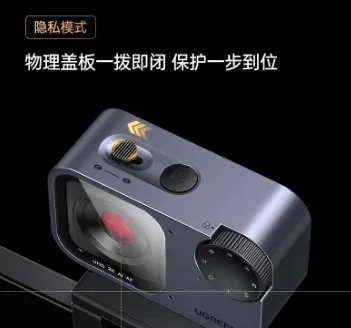
At the same time, the CM973 is equipped with a physical privacy shutter for more secure use; the bottom adopts a dual mounting structure of 1/4 standard screw port and magnetic suction clamp, which can be flexibly installed on monitors, desktop stands or tripods. It is compatible with Windows, macOS, Linux (UOS, Kylin, Ubuntu) and Android devices. It is plug-and-play via USB-A without drivers, adapting to mainstream live streaming, conference and education software, making it an ideal choice for high-quality live streaming and professional remote communication scenarios.
1.2 CM929 2K AI Live Streaming Camera (4 Megapixels)
The GreenLink CM929 2K AI Live Streaming Camera is a practical live streaming camera that balances clear image quality, intelligent tracking and high cost-effectiveness. It is suitable for multiple scenarios such as live streaming sales, game live streaming, video conferences, online courses and daily content creation. Equipped with a 4-megapixel high-definition lens, it supports up to 2K@30Hz video output, which can present clearer character contours, product details and desktop content than ordinary cameras, making live streaming display and remote communication more textured.
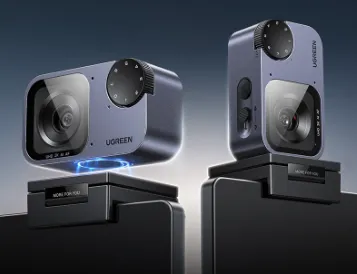
The CM929 is more than just a camera; it is like an intelligent shooting assistant that understands rhythm. The built-in AI automatic tracking function can intelligently identify the position of the person, keeping the on-camera person always in the center of the frame. When the anchor moves back and forth, transitions left and right, or picks up products to show during the explanation, there is no need to frequently manually adjust the lens, and the frame will follow naturally, effectively avoiding problems such as people running out of the frame and offset composition.
For live streaming display and teaching demonstration scenarios, the CM929 supports gesture control and 2x AI zoom. Users can quickly complete operations such as image zooming and tracking through simple gestures, making product close-ups, detail display and key explanation more convenient. Combined with 7 filter styles, the picture effect can be flexibly switched according to different live streaming atmospheres and usage scenarios, making content presentation more stylized.
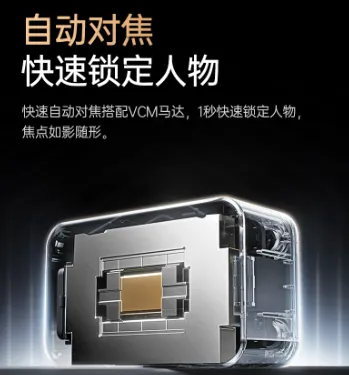
In terms of focusing ability, the CM929 is equipped with a VCM motor for fast autofocus, which can quickly switch focus between people and products, locking the main subject in about 1 second, reducing the out-of-focus embarrassment during close-up display. Whether it is showing product textures, demonstrating operation steps, or speaking in daily meetings, the picture can remain clear and stable.
In addition, the CM929 is also equipped with a physical privacy shutter to balance usage safety and privacy protection; the bottom adopts a dual mounting structure of 1/4 standard screw port and magnetic suction clamp, which can be installed on monitors, desktop stands or tripods. The product is compatible with Windows, macOS, Linux and other systems, plug-and-play without drivers, adapting to mainstream live streaming, conference and office software. For anchors, video bloggers, online course teachers, remote office workers and game players, the CM929 is a cost-effective choice with clear image quality, intelligent functions and easy operation.
2. Ingenic T-Series Vision Chips: Underlying Support for Audio and Video Algorithms
The stable imaging, encoding and AI audio capabilities of the two cameras are fundamentally supported by the mature Ingenic T-series vision processor platform. The entire chip architecture has been deeply adapted and optimized for USB video capture devices, improving the end-user experience from four dimensions: image signal processing, video encoding, AI computing power, and memory scheduling.
2.1 ISP Image Signal Processing Optimization, Uniform Improvement of Image Quality in Light and Dark Environments
The T-series is equipped with a new generation Gekko 2.0 AI-ISP image engine, with a complete built-in 3A automatic imaging algorithm, which can automatically optimize low-light noise, suppress dark area color cast, and eliminate lens purple fringing and pseudo-color. Compared with traditional solutions, the chip can refine the chromatic noise in shadow areas, optimize lateral chromatic aberration, and greatly improve the picture transparency in scenes with large contrast between light and dark. Combined with HDR dual-frame fusion technology, in complex light environments such as indoor backlighting and low-light live streaming rooms, the human face is evenly exposed, avoiding problems such as dark faces and overexposed highlights that lose details, perfectly matching the photosensitive output of the CMOS sensors of the two cameras.
2.2 Efficient H.265 Intelligent Encoding, Reducing Transmission Bandwidth Pressure
The chip has a built-in Hera-1.2 video encoder, which supports both H.265 and H.264 encoding formats, and is equipped with AI intelligent bit rate control technology. When the device is running, it can intelligently distinguish the foreground portrait and background picture, and dynamically allocate bit rate resources, reducing bandwidth usage by 38% at the same clarity level; in high-dynamic live streaming scenarios, the peak value of picture frame size fluctuation drops by more than 39%, solving the problems of stuttering and mosaics in live streaming and remote conferences. In low-bit rate scenarios, the details of portraits and products can still be retained, taking into account both network smoothness and picture texture, adapting to the ordinary broadband environment for home and office use.
2.3 Built-in 1T INT8 NPU Computing Power, Supporting Terminal AI Noise Reduction Algorithm
The T-series integrates 1TOPS INT8 computing power hardware NPU, which provides local AI computing support for the camera's dual-microphone noise reduction and portrait exposure optimization, without relying on the computing power of the computer's CPU. The exclusive Mert intelligent audio algorithm realizes full-duplex intercom, howling suppression, and white noise filtering. The hardware-level computing power ensures real-time noise reduction without delay; it also supports False-Alarm image filtering, reducing imaging interference caused by picture shake and sudden light and shadow changes, making the picture transition smoother during moving focus.
2.4 Lightweight Memory Scheduling and Multi-System Underlying Adaptation
The chip is equipped with an XBurst1 1.2GHz processor core, paired with SIMD128 acceleration instruction set, and supporting Magik-New intelligent memory allocation technology, which allocates memory resources on demand, greatly optimizing memory usage in the 8-megapixel 4K high-pixel mode, and ensuring stable device startup and image output speed. The hardware natively supports multi-camera MIPI input and USB2.0 OTG output interfaces, and the underlying drivers are adapted to Windows, macOS, and the full series of domestic Linux systems. Manufacturers do not need to additionally debug the underlying drivers during the development stage, realizing plug-and-play without drivers and reducing the terminal adaptation threshold.
The entire T-series chip solution distinguishes multiple versions of standard power supply and low power consumption, taking into account the development of high-pixel professional devices and lightweight inclusive devices. With a unified SDK development ecosystem, manufacturers can quickly launch USB camera products with different pixels and positioning based on the same technical base, realizing the standardized implementation of image quality, audio and compatibility.
3. Scenario Implementation Summary
The two cameras CM973 and CM929 form a clear product hierarchy relying on the mature Ingenic T-series vision algorithm base: the CM973 is more suitable for users with higher requirements for image quality, audio and professional performance, such as professional live streaming, large conferences, high-quality online courses and enterprise-level video communication scenarios. The CM929 is more suitable for users who pursue intelligent functions and high cost-effectiveness, such as daily live streaming, game live streaming, short video content creation, online courses and remote office scenarios. Through collaborative optimization from the underlying chip ISP imaging, intelligent encoding to the terminal hardware sensor and audio capture structure, it completely solves the common pain points in the industry such as poor low-light image quality, noisy audio capture, picture stuttering, and poor system compatibility.
With the continuous popularization of remote online scenarios, USB cameras relying on domestic vision chip solutions will continue to highlight their advantages in image quality, cost and domestic adaptation. Ingenic T-series will also continuously iterate image and AI algorithms to provide stable underlying technical support for video capture devices in live streaming, conference and education scenarios.